Didactic Projects
Innovative proposals implemented in the classroom
This page presents some of the educational projects I have developed, applying active methodologies, cooperative learning and an integrative approach across multiple curricular areas.
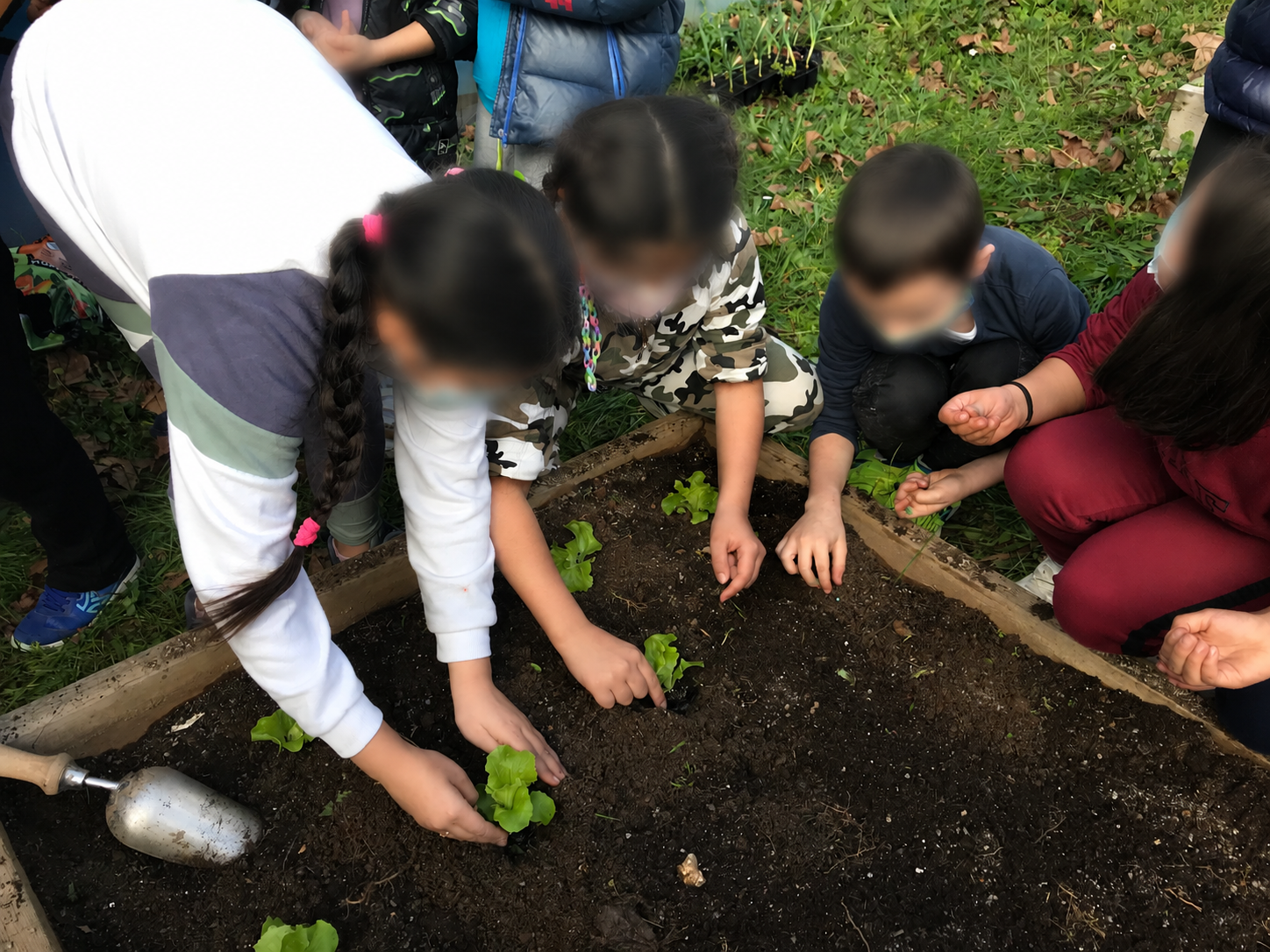
Plants as Living Beings
🌱 Overview
Context: Didactic unit implemented in 3rd grade Primary Education (23 students, 8-9 years old) during Practicum II at CEIP As Fontiñas, Santiago de Compostela.
Duration: 2 weeks (March 2022)
Integrated areas: Natural Sciences, Social Sciences, Artistic Education
An interdisciplinary proposal centered on the study of plants as living beings, their benefits for life and the importance of green spaces in cities.
🎯 Main Objectives
- Build general ideas about plant characteristics
- Identify plant parts and their vital functions
- Appreciate the importance of plants for life
- Value the benefits of green spaces in cities
- Develop a respectful attitude toward nature
- Carry out creative artistic activities
Methodology
Pedagogical approach: Contextualized learning based on interaction and cooperation
Method: Pre-activity explanations aimed to generate feedback with students so they participated in their own learning process. Activities encouraged reflective learning based on communication and collaboration.
Core theme: "Plants as living beings" — a central concept that contextualized all activities and explanations.
Activities Conducted
1️⃣ My Plant and Its Parts
Individual - 20 minutes
Students drew a plant and labeled its parts (roots, stem, leaves, flowers, fruits). This activity allowed visual internalization of concepts for later study.
2️⃣ Experimenting with Chlorophyll
Groups of 5 students - 40 minutes
Objective: Understand photosynthesis and the role of chlorophyll.
Procedure: Using a mortar, grass, acetone and filter paper, students extracted and observed the green pigment from chlorophyll through simple chromatography. It was a hands-on experience that connected theory with scientific practice.
3️⃣ Description of Green Areas
Collaborative - 35 minutes
Students used Google Earth to view Santiago de Compostela from above and identify green areas. They then described natural space images, developing observation and descriptive skills.
4️⃣ Importance of Green Spaces
Technology project - 50 minutes
Skills: Research, analysis and information processing using technology.
Students used computers to search for information about the benefits of green spaces in cities, selected and organized content clearly for a later oral presentation.
5️⃣ My Garden of the Future
Individual - 50 minutes
Students creatively designed their ideal garden, representing different types of plants studied. It allowed artistic expression while reinforcing botanical concepts.
6️⃣ The Tree of Life
Individual - 50 minutes
As a symbolic closure, students painted a Tree of Life representing plants as an essential source of life on our planet. A visual metaphor for the learning gained.
7️⃣ Science Experiment Report
Individual with support - 40 minutes
Students wrote a scientific report documenting the chlorophyll experiment, including procedure, results, conclusions and personal reflection. It developed scientific communication skills.
8️⃣ Question Contest
Groups of 5 - 50 minutes
Fun assessment: Collaborative contest where groups answered questions about the content covered. It allowed reviewing knowledge in a motivating way.
Results and Evaluation
✅ Strengths
- Coherent thematic structure
- Age-appropriate activities
- Successful integration of multiple areas
- Positive student response
- Effective experiential learning
- Playful and motivating approach
🎯 Areas for Improvement
- Some explanations could have been clearer
- Broader source research beyond the textbook
- More individualized follow-up for students with difficulties
- Better adaptation to different learning rhythms
General Evaluation: Students had a very engaging and innovative experience compared to their usual routine. The project showed that curricular content can be taught creatively, integrally and meaningfully, promoting critical thinking and appreciation for nature.
Learnings
📚 Competencies Developed
- Digital: Use of technology for research and presentation
- Learning to learn: Metacognition and student self-assessment
- Social and civic: Cooperative work and environmental awareness
- Initiative and entrepreneurship: Autonomous projects and creativity
🌟 Lessons Learned
- The importance of adapting to student comprehension levels
- Individualized support is essential for students with difficulties
- Active methodologies increase motivation and meaningful learning
- Curricular integration connects concepts more effectively
Innovative Methodology in Action
This project shows how I combine pedagogical theory with innovative educational practice, creating meaningful learning experiences that respect student diversity and promote holistic development.